


Chinedu thought he had done everything right. From his base in Manchester, he sent money home in stages. The land was secured in Lagos. A contractor was introduced through a family friend. The drawings were approved quickly. Everyone sounded confident. He even began to wonder why some of his friends experienced construction delays in Nigeria.
“Six months and you’ll be doing housewarming,” they told him.
The first three months went smoothly. Foundation completed. Blocks rising. Photos sent regularly. Then things slowed.
By month five, updates became inconsistent.
By month seven, there were “material issues.”
By month nine, the site was quiet.
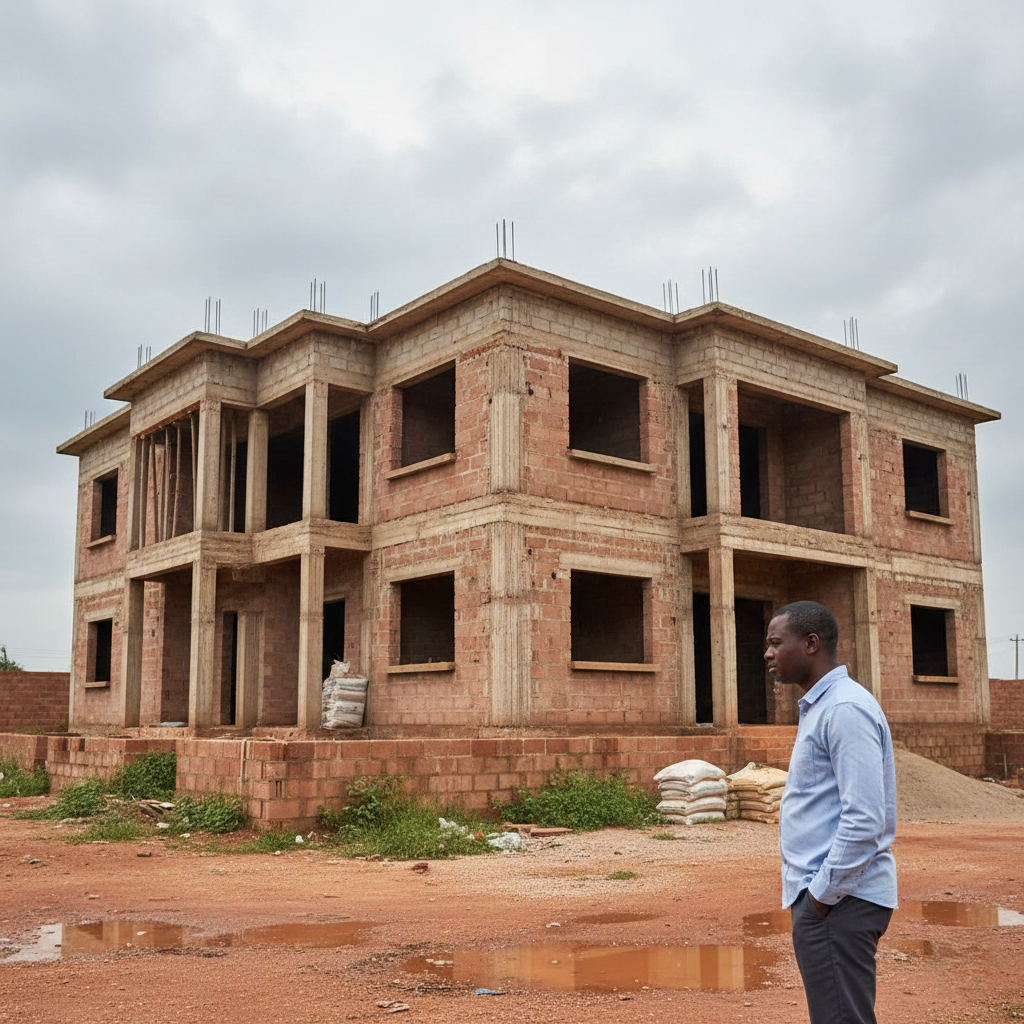
When Chinedu finally visited Nigeria unannounced, he stood in front of a half-plastered structure with weeds growing around it. The scaffolding leaned against the wall like something forgotten.
That was when he truly understood the reality of construction delays in Nigeria.
READ MORE: Before You Build: The Questions You Should Ask Any Construction Company
Construction Delays in Nigeria Often Begin Before the First Block
Chinedu later realized something painful: the delay didn’t start when the workers disappeared. It started at the beginning.
There was no detailed project timeline.
No structured milestone payments.
No documented procurement plan for materials.
The agreement had been verbal, friendly, and hopeful — but not structured. Construction delays in Nigeria often begin when planning is rushed and clarity is sacrificed for speed.
Construction Delays in Nigeria and Funding Gaps
As material prices rose, Chinedu’s contractor requested additional funds earlier than expected. Because there was no phased financial structure, budgeting became reactive instead of planned.
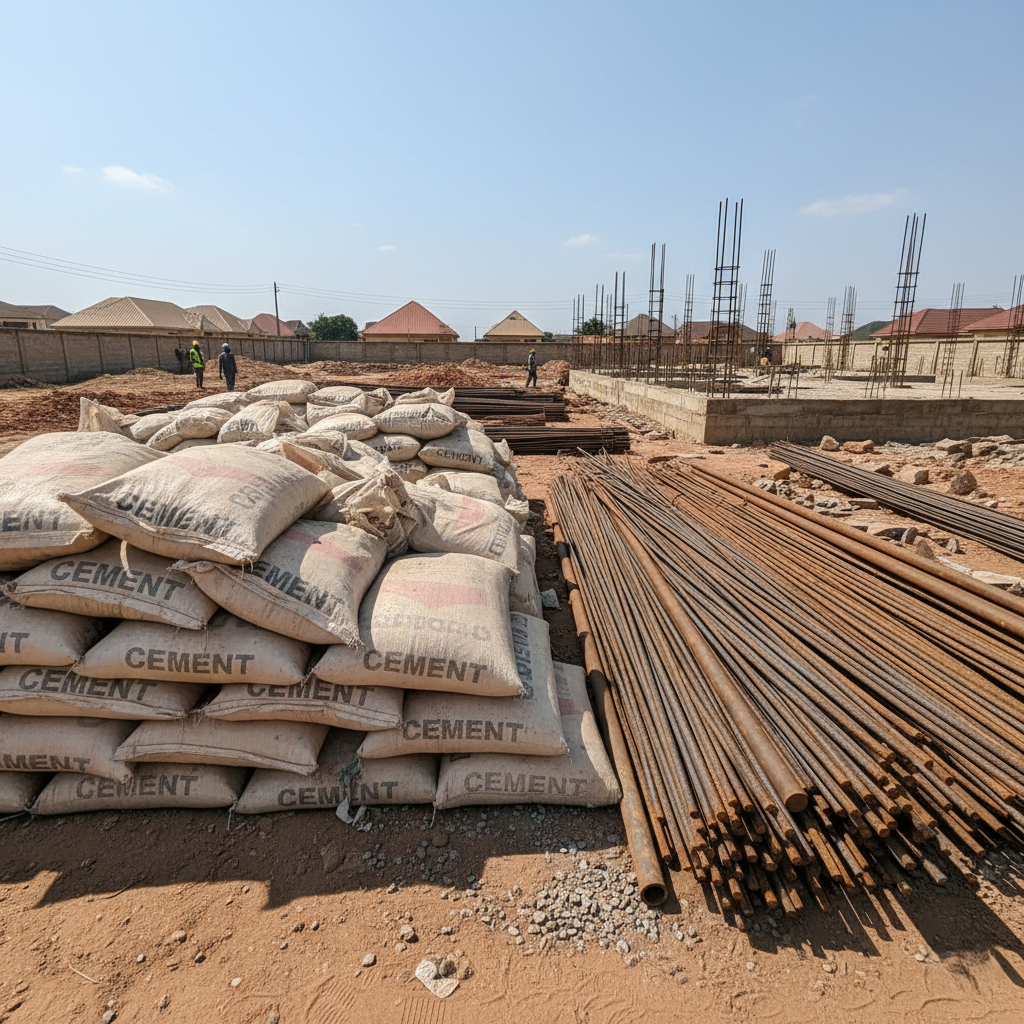
Work paused while money was rearranged.
Construction delays in Nigeria frequently stem from cash flow interruptions — not because clients are unwilling, but because planning did not anticipate market volatility.
Construction Delays in Nigeria Caused by Weak Supervision
Another issue emerged: there was no consistent site supervision.
When minor mistakes were made in block alignment and plumbing layout, they weren’t caught early. Rework became necessary. Rework consumed time. Time stretched into months.
Without structured oversight, construction momentum fades.
Weather and Excuses
By the rainy season, the contractor blamed the weather.
Rain does affect construction — but experienced project managers plan buffer periods. They sequence tasks strategically. They don’t allow seasons to stall entire projects.
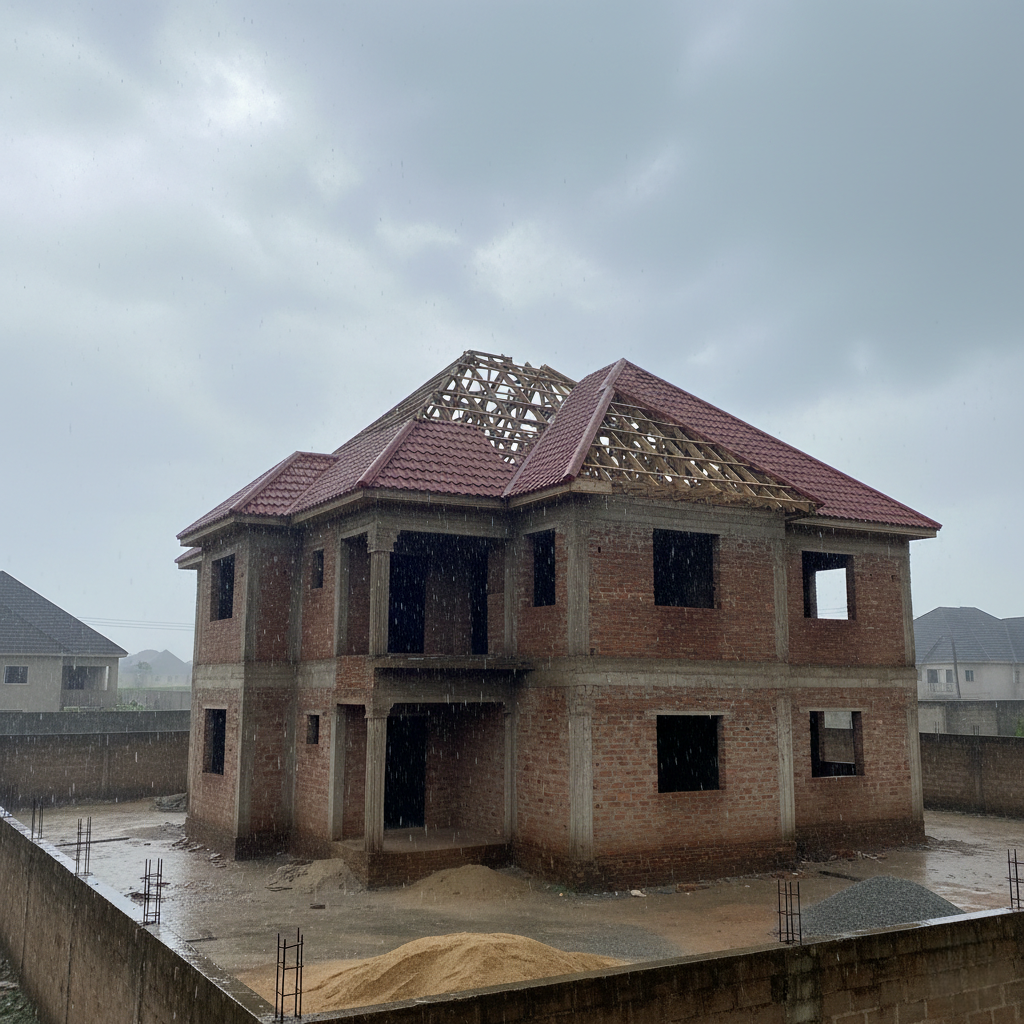
Chinedu wasn’t dealing with bad weather. He was dealing with poor structure.
The Turning Point
Frustrated but determined, Chinedu decided to restart properly.
This time, he insisted on:
- A documented construction timeline
- Clear milestone-based payments
- Defined material procurement schedules
- Professional site supervision with regular reporting
Work resumed — not dramatically, but steadily. There were still normal challenges. But there were no mysterious silences. No sudden disappearances. No vague explanations.

By month six of the restart, roofing was complete. By month nine, finishing works were underway. The same project that once felt abandoned began moving with rhythm.
IN OTHER NEWS: Economic shocks, supply bottlenecks slow construction projects
A Different Ending
Two years after that painful site visit, Chinedu stood again in front of the house. But this time, the gates opened smoothly. The compound was clean. The building stood finished — not rushed, not improvised, but complete.

Construction delays in Nigeria are common. But Chinedu learned they are not inevitable.
When structure replaces assumption, progress replaces frustration.
How Mega Labourers Services Can Help
At Mega Labourers Services, we understand that time is part of your investment.
We approach construction with:
- Structured planning
- Phased financial clarity
- Professional supervision
- Transparent reporting
Because building should feel progressive — not uncertain.
If you are planning a construction project, start with a system, not just a contractor.






Very insightful article. Thanks for sharing Sam.