
By Mega Labourers Services Ltd
Building a house, office complex, rental property, or commercial structure is one of the biggest financial decisions anyone can make.
For many Nigerians at home and abroad, building represents years of savings, dreams, sacrifice, and future security.
Yet sadly, thousands of people lose millions every year — not because building is impossible — but because they make avoidable mistakes.
Some projects get abandoned halfway.
Some buildings begin to crack within a few years.
Some owners spend double their original budget.
Others end up fighting contractors, suppliers, or even government authorities.
At Mega Labourers Services Ltd, after decades of delivering residential, commercial, and industrial construction solutions across Nigeria, we have seen one painful truth repeatedly:
Most building disasters do not start on site… they start from wrong decisions before the first block is laid.
If you are planning to build, this article may save you millions.
1. Starting Construction Without a Proper Plan
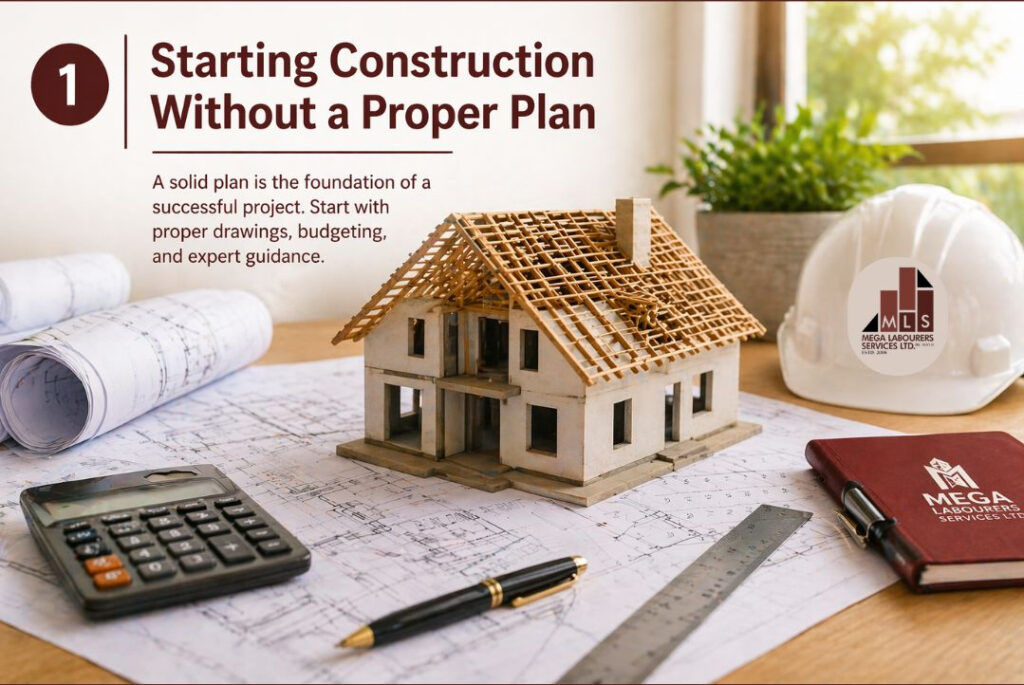
One of the most dangerous mistakes people make is beginning construction simply because they are eager to “start something.”
They buy blocks.
Bring labourers.
Clear the land.
And start digging.
Without:
- approved architectural drawings,
- structural drawings,
- electrical layouts,
- plumbing plans,
- bill of quantities,
- or a construction timeline.
This is exactly how budget leakage begins.
Without a professional roadmap, every stage becomes guesswork.
You keep changing things midway:
“Move this room.”
“Add one more toilet.”
“Extend the balcony.”
“Shift the staircase.”
Each change means demolition, fresh materials, extra labour, and wasted money.
What happens?
You end up spending for the same thing two or three times.
Professional advice:
Always complete your full planning and design process before site mobilization.
2. Hiring Cheap but Unqualified Contractors
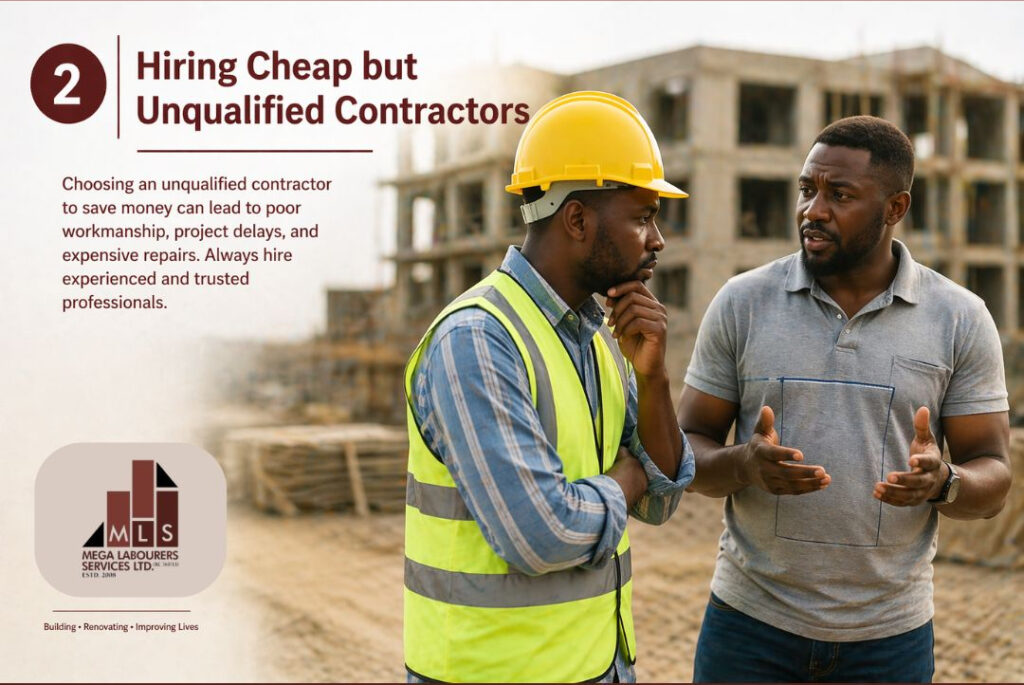
This is perhaps the most common financial trap in Nigerian construction.
Many property owners choose contractors based on:
“He is cheap.”
instead of:
“He is competent.”
Cheap labour often comes with:
- poor workmanship,
- weak supervision,
- material theft,
- inaccurate measurements,
- no safety standards,
- and project delays.
The painful truth is:
Cheap contractors usually become the most expensive mistake.
Why?
Because after poor execution, you spend again on corrections.
Walls become uneven.
Foundations are weak.
Tiles begin to lift.
Roof starts leaking.
Paint peels.
Electrical faults begin.
Now you’re paying a second professional to repair the first person’s errors.
3. Underestimating the Real Cost of Building
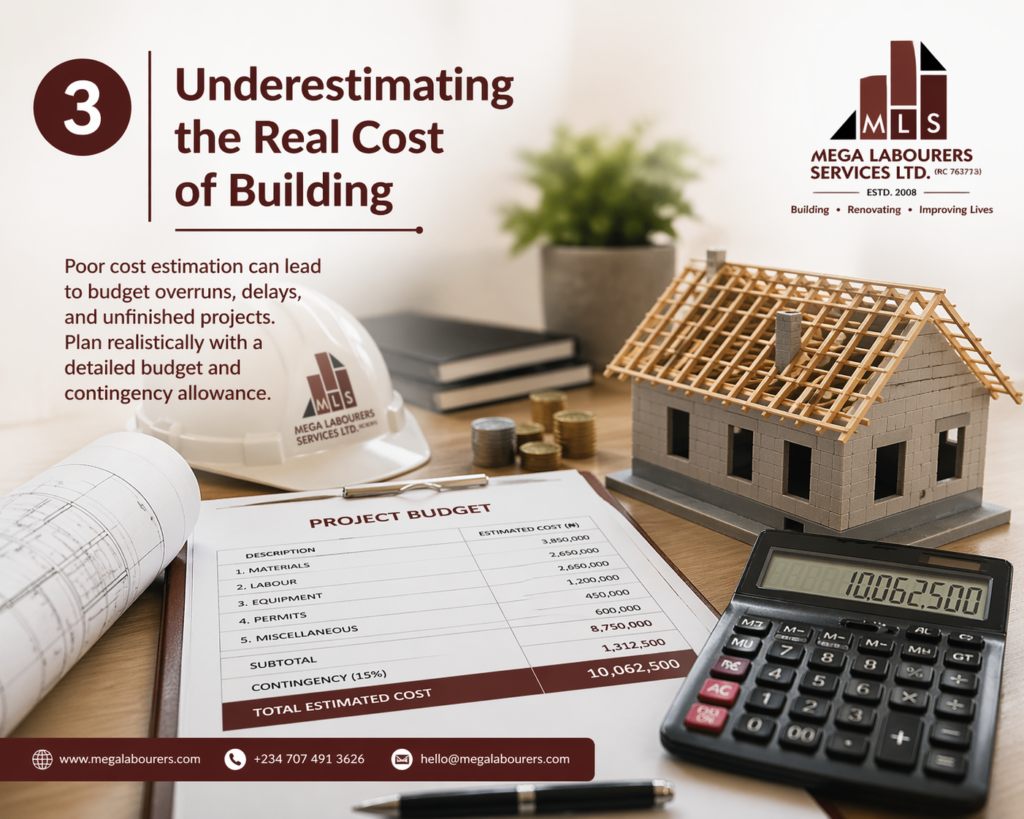
Many people begin building with emotional figures instead of professional cost estimates.
Someone says:
“I have 10 million naira, let me start.”
But no detailed financial feasibility was done.
No material market survey.
No labour costing.
No contingency plan.
Then inflation hits.
Cement price rises.
Iron rods go up.
Transportation changes.
Government levies appear.
Suddenly the project becomes a burden.
This is why many buildings remain uncompleted skeletons for years.
Smart builders know:
Building is not just about starting.
Building is about sustaining completion.
You need a realistic budget with at least 10–20% contingency allowance.
4. Ignoring Soil Test and Site Investigation
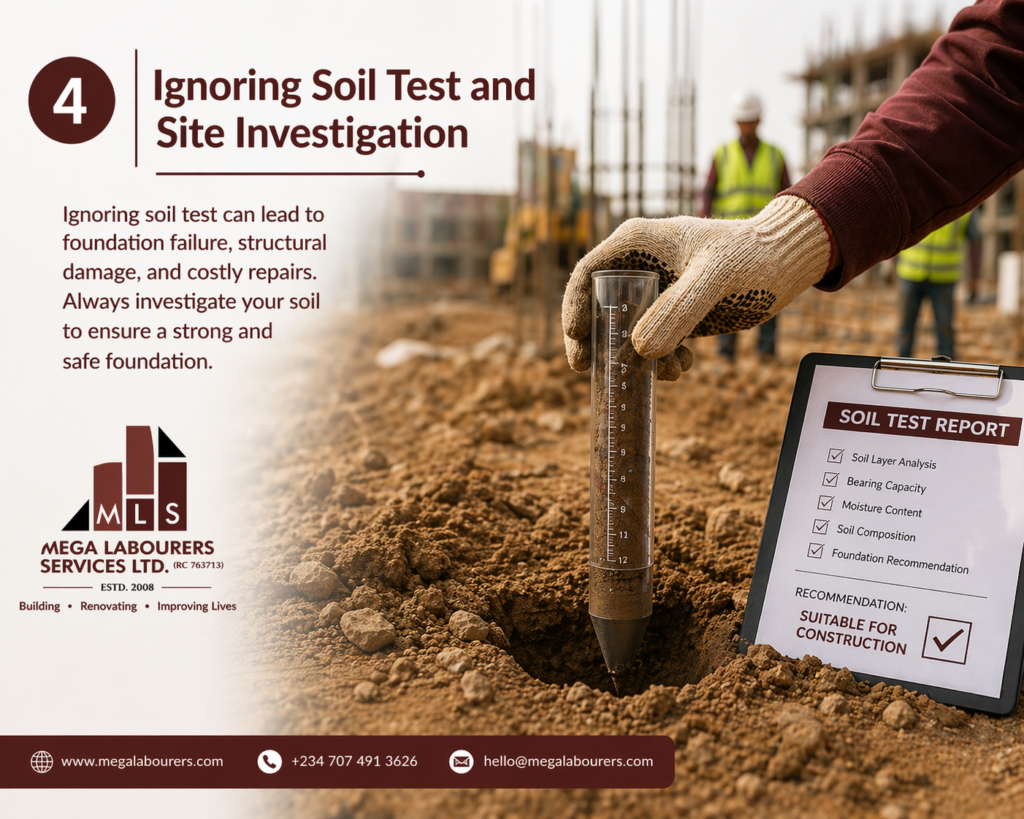
This is one silent killer many people do not understand.
Not every land can carry the same type of foundation.
Some areas have:
- swampy soil,
- loose sand,
- waterlogged ground,
- erosion-prone layers,
- unstable subsoil.
If you build blindly without geotechnical checks, your foundation may be sitting on disaster.
That is how buildings begin to show:
- sinking floors,
- wall cracks,
- differential settlement,
- structural weakness.
A simple soil test can determine:
- foundation depth,
- concrete strength needed,
- reinforcement level,
- drainage considerations.
Skipping this to save money can cost you the entire building.
5. Buying Low-Quality Building Materials
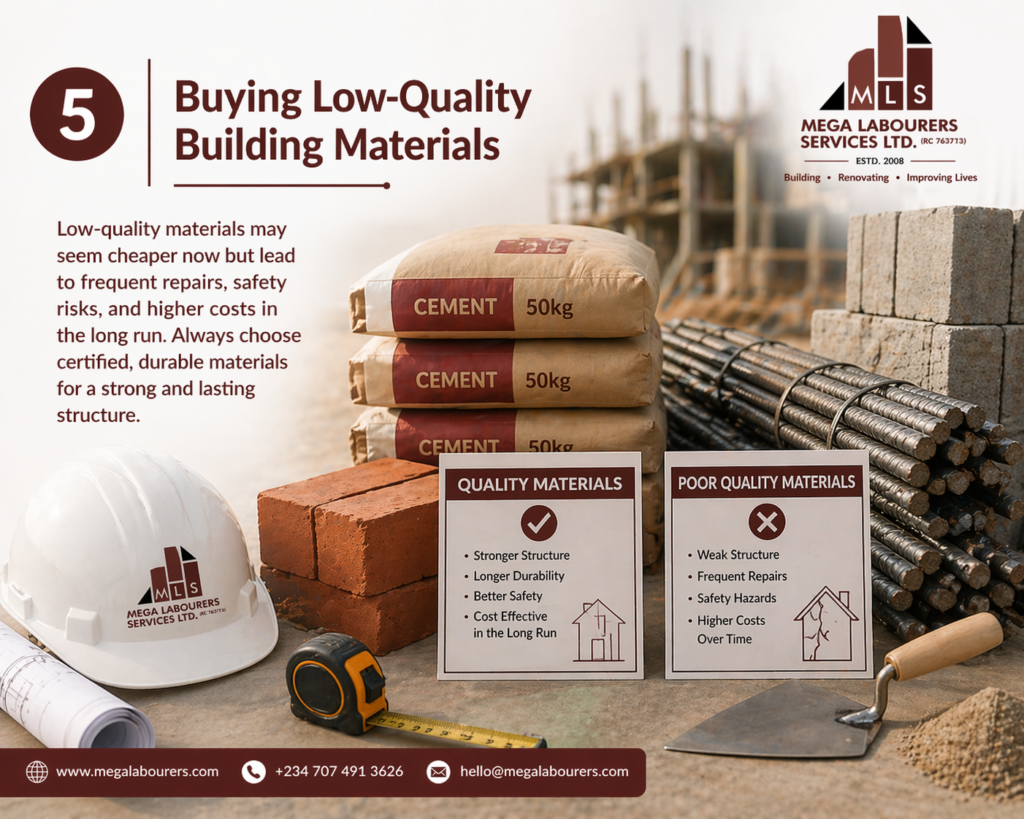
Many people think all cement is the same.
All rods are the same.
All tiles are the same.
All electrical wires are the same.
That assumption destroys buildings.
Substandard materials may look fine on purchase day, but they fail under long-term pressure.
Examples:
- weak rods reduce structural integrity,
- poor plumbing materials burst underground,
- fake electrical cables cause fire risk,
- inferior roofing sheets corrode quickly.
Low-quality materials create future maintenance costs that never end.
Remember:
The building remembers every cheap material you used.
6. Lack of Proper Site Supervision
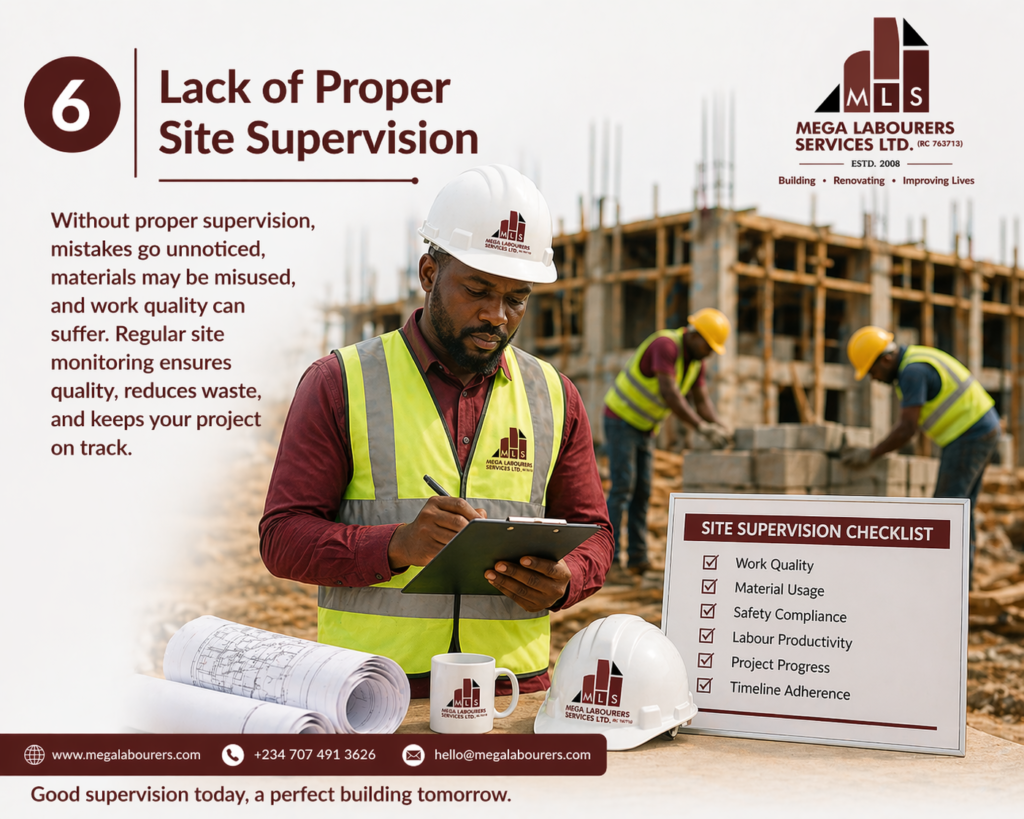
Some property owners release money and disappear.
Especially diaspora clients.
They assume labourers are working.
But on unsupervised sites, many hidden issues happen:
- cement is under-mixed,
- rods are reduced,
- blocks are stolen,
- labour time is wasted,
- workmanship drops.
Without professional monitoring, you may think your building is progressing while quality is silently collapsing.
Construction is not a “pay and leave” venture.
It requires technical supervision at every stage.
7. Making Structural Changes Midway
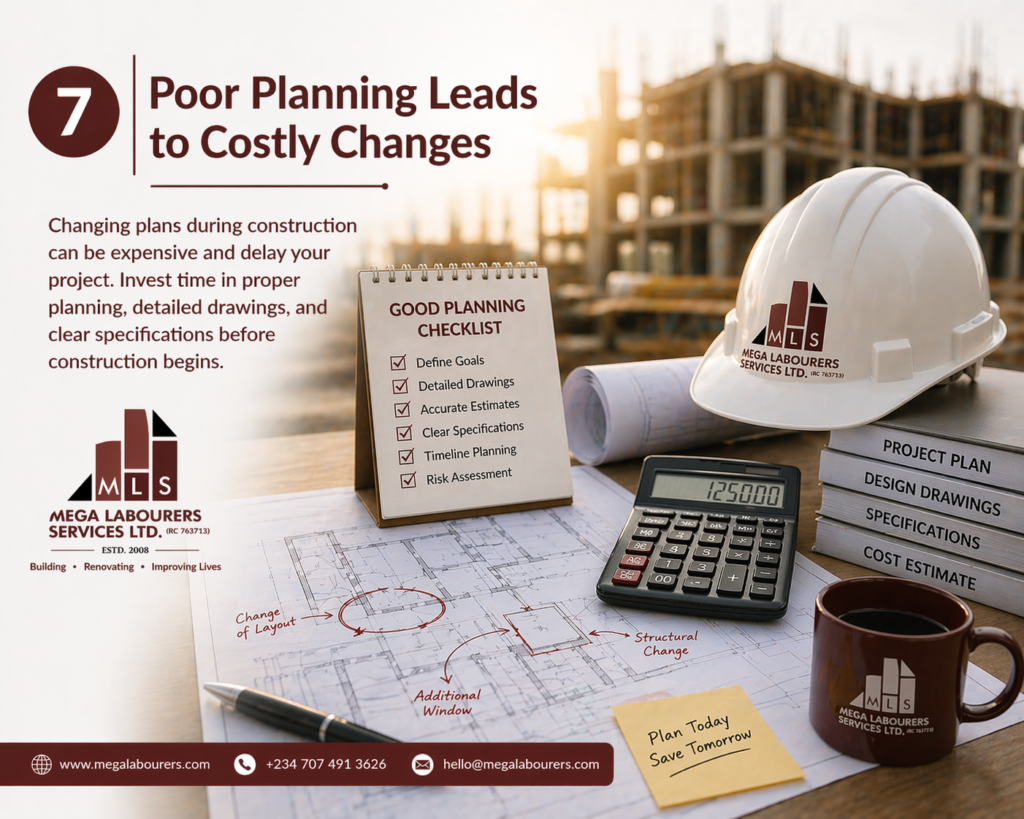
This is a money-draining habit.
Owner sees another building online and says:
“Let us add a penthouse.”
“Can we shift this wall?”
“I want bigger windows.”
“Let’s remove this pillar.”
Without understanding engineering consequences.
One structural change can affect:
- beam load,
- column distribution,
- roofing alignment,
- plumbing channels,
- electrical pathways,
- staircase positioning.
Meaning: one small emotional decision can trigger a chain of expensive redesigns.
8. Ignoring Government Approvals and Compliance
Many people want to avoid “government wahala.”
So they skip:
- building approval,
- planning permit,
- environmental compliance,
- drainage setbacks,
- zoning restrictions.
Until one day enforcement officials arrive.
And work is stopped.
Sometimes demolition notices are issued.
Sometimes heavy penalties follow.
A building done outside regulation can become a legal liability even after completion.
Always ensure your construction complies with local authority requirements.
9. No Clear Project Timeline
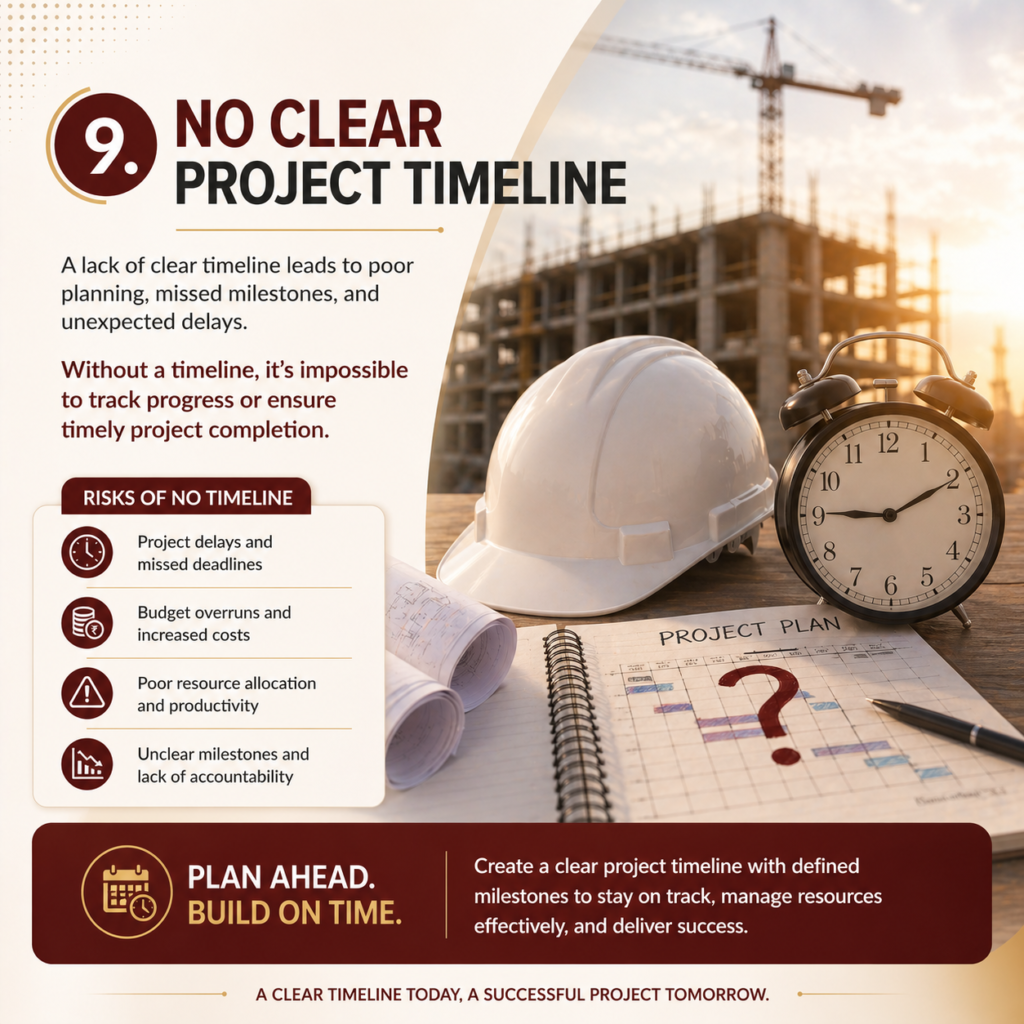
When there is no professional schedule:
- labourers drag work,
- suppliers delay delivery,
- materials expire on site,
- costs keep rising.
A project meant for 8 months becomes 2 years.
The longer a project stays open, the more expensive it becomes.
Why?
Because inflation never pauses for unfinished dreams.
A properly managed construction timeline saves:
- labour costs,
- security costs,
- material wastage,
- repeated mobilization.
10. Trying to Build Without a Trusted Construction Partner
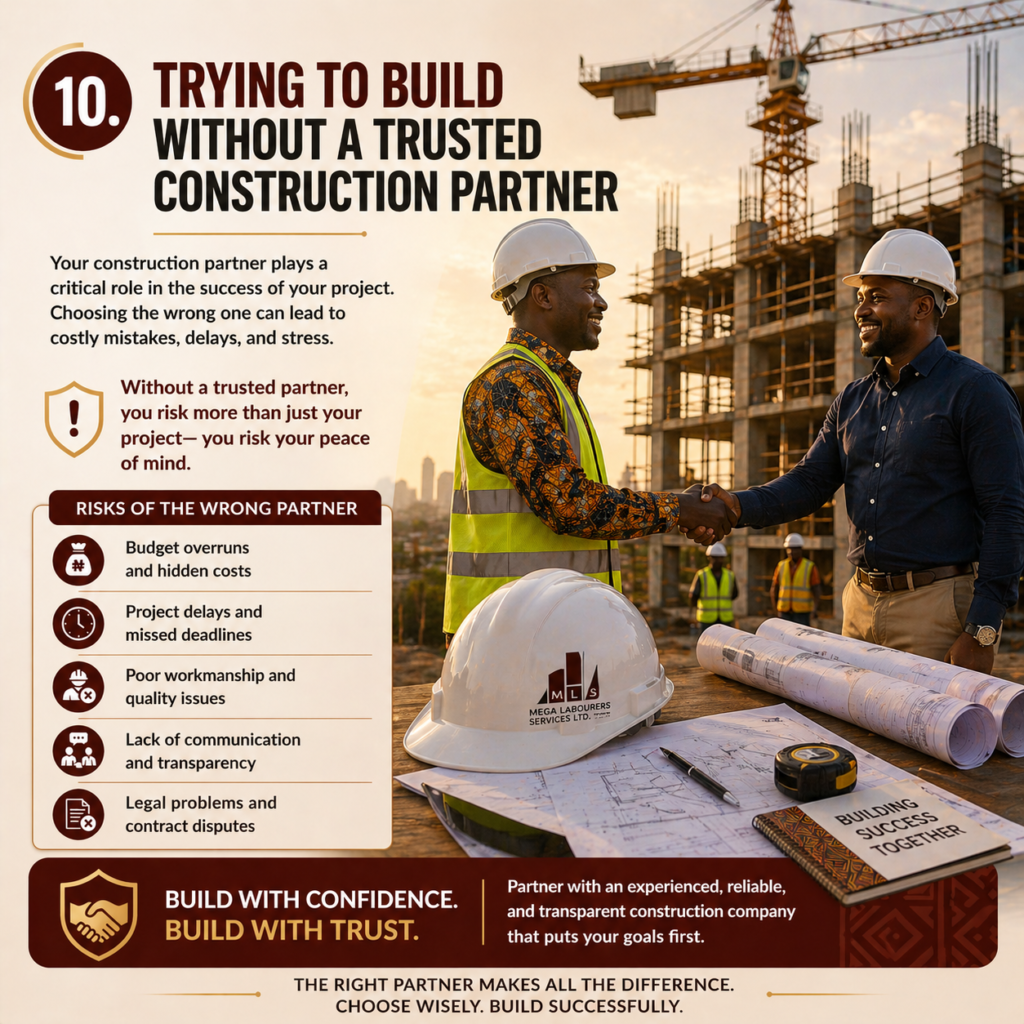
This is the biggest mistake of all.
Many people try to coordinate:
- architect,
- mason,
- carpenter,
- plumber,
- welder,
- electrician,
- roofer,
- painter,
all by themselves.
This creates:
- communication gaps,
- blame games,
- inconsistent quality,
- no accountability.
Building becomes stress, confusion, and constant emergency spending.
A professional construction company provides:
- one accountability system,
- one quality standard,
- one supervision structure,
- one financial control point.
This is what saves owners from emotional and financial exhaustion.
Why These Mistakes Cost Nigerians Millions Every Year
Construction failures are rarely caused by bad luck.
They are usually caused by:
poor planning + poor supervision + poor professional choices.
And once concrete is cast wrongly…
correction becomes expensive.
This is why smart investors today no longer build casually.
They build strategically.
Build Once. Build Right. Build With Confidence.
At Mega Labourers Services Ltd, we provide:
- Professional Building Construction
- Civil Engineering Solutions
- Renovation & Structural Works
- Site Supervision
- Project Planning & Costing
- Facility Maintenance
- Quality Construction Materials Guidance
With over 25 years of proven industry experience, our mission is simple:
To help clients avoid costly mistakes and deliver buildings that stand strong, beautiful, and valuable for decades.
Ready to Start Your Building Project the Right Way?
Do not gamble with millions.
Do not trust trial and error.
Do not build based on assumptions.